
UK Subsidence Claims Surge in 2026: Why Record Heat and Drought Are Putting British Homes at Risk
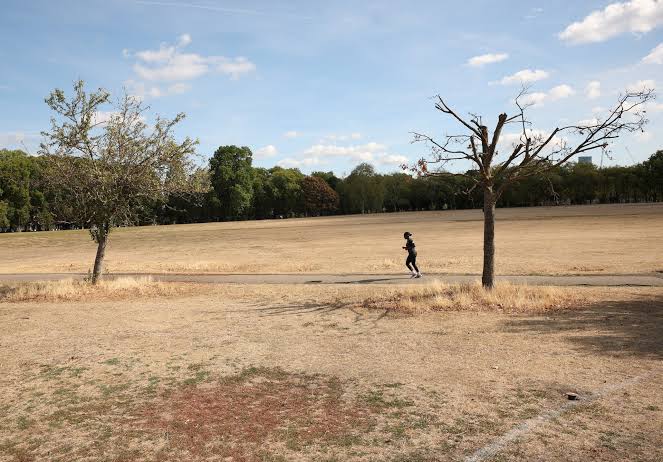
The UK is experiencing another significant period of subsidence-related property damage. Following consecutive years of unusually hot and dry weather, insurers are reporting increased ground movement, rising repair costs and growing pressure on the subsidence claims sector.
The exceptionally dry summer of 2026 has highlighted the vulnerability of thousands of British homes, particularly those built on clay-rich soils.
For homeowners, insurers and property professionals, understanding the causes of subsidence and identifying effective repair strategies has become increasingly important.
Subsidence Claims in 2026: What Do the Latest Figures Show?
According to the Association of British Insurers (ABI), insurers paid out £72 million in domestic subsidence claims during the second quarter of 2026.
The average subsidence claim reached a record £20,000, more than £2,000 above the equivalent period in 2025.
The figures highlight the growing financial impact of ground movement on residential properties.
Further analysis published by WTW in October 2026 suggests that national subsidence claim volumes could be approximately:
45% higher than in 2025.
25–30% higher than in the previous significant subsidence years of 2018 and 2022.
These figures are market forecasts rather than final annual claims statistics. Nevertheless, they indicate the potential scale of the challenge facing the UK insurance industry.
Of particular concern is the accumulation of claims from consecutive years. New cases arising in 2026 are being reported while many properties affected during 2025 remain under investigation, monitoring or repair.
The Summer of 2026: Exceptional Weather Conditions
The Met Office confirmed that the summer of 2026 was provisionally the warmest on record across the United Kingdom, with an average temperature of 16.5°C.
Rainfall was also considerably below normal in several regions.
England received just 64% of its average summer rainfall, while Wales received only 59%.
July was particularly exceptional. England recorded only 6.5 mm of rainfall, making it the driest July in a meteorological record extending back to 1836.
These prolonged dry conditions have direct implications for ground stability.
As soil moisture decreases, certain ground materials undergo changes in volume and mechanical behaviour. Clay-rich soils are particularly sensitive to these variations.
Why Does Drought Cause Subsidence?
Ground subsidence occurs when the ground supporting a building moves downwards, potentially affecting the foundations and the structure above.
One of the most common mechanisms in the UK is the shrinkage of clay soils.
Clay contains minerals that retain water. During prolonged dry periods, moisture evaporates or is extracted by vegetation, causing the soil to contract.
If this contraction occurs unevenly beneath the foundations, differential settlement can develop.
The resulting stresses may cause:
Diagonal cracking around doors and windows.
Cracks in external brickwork.
Internal wall and ceiling damage.
Doors and windows becoming difficult to open or close.
Uneven movement of extensions or adjoining structures.
Trees and large shrubs can intensify this process by extracting moisture from the soil through their root systems.
Properties with shallow foundations and nearby mature vegetation may therefore be especially vulnerable.
Why Are Consecutive Dry Years Particularly Concerning?
The subsidence risk associated with 2026 cannot be considered in isolation.
The UK also experienced exceptionally warm and dry conditions during 2025.
When drought conditions occur in successive years, some clay soils may not fully recover their previous moisture levels between dry periods.
Consequently, foundations may experience renewed or progressive movement.
This is particularly relevant to properties already showing signs of distress or those undergoing monitoring following earlier insurance claims.
According to Zurich’s October 2026 assessment, subsidence activity has increased across the UK, with particularly significant exposure in areas containing clay-rich soils.
Which Parts of the UK Are Most Vulnerable?
Subsidence risk varies considerably according to local geology, soil conditions, vegetation and foundation design.
Areas of London and the South East are particularly associated with shrinkable clay formations.
Locations including Essex, Kent, Hertfordshire and parts of East Anglia also contain ground conditions susceptible to moisture-related movement.
However, subsidence is not restricted to these areas.
Properties elsewhere in the UK may experience foundation movement associated with unsuitable fill, leaking drainage systems, groundwater changes or insufficient ground-bearing capacity.
A site-specific investigation is therefore essential before identifying the cause of structural damage.
What Should Homeowners Do If They Suspect Subsidence?
Early identification and accurate diagnosis can help prevent unnecessary repairs and additional expenditure.
Homeowners should document visible damage, record when cracks first appeared and check whether movement appears to be progressing.
Where subsidence is suspected, the property insurer should be notified in accordance with the policy conditions.
A qualified structural or geotechnical professional may then need to establish whether the damage represents active foundation movement or another form of building deterioration.
Depending on the circumstances, investigations can include monitoring cracks, inspecting drains and assessing the soil beneath the foundations.
If foundation repairs are needed, homeowners can ask whether resin injection or micropiles are suitable for their property. When comparing quotes, it is worth checking what the subsidence resin injection cost includes, such as site preparation, monitoring and any work needed to restore the affected area.