
How to Mix Patterns in Home Decor Without Overwhelming the Space
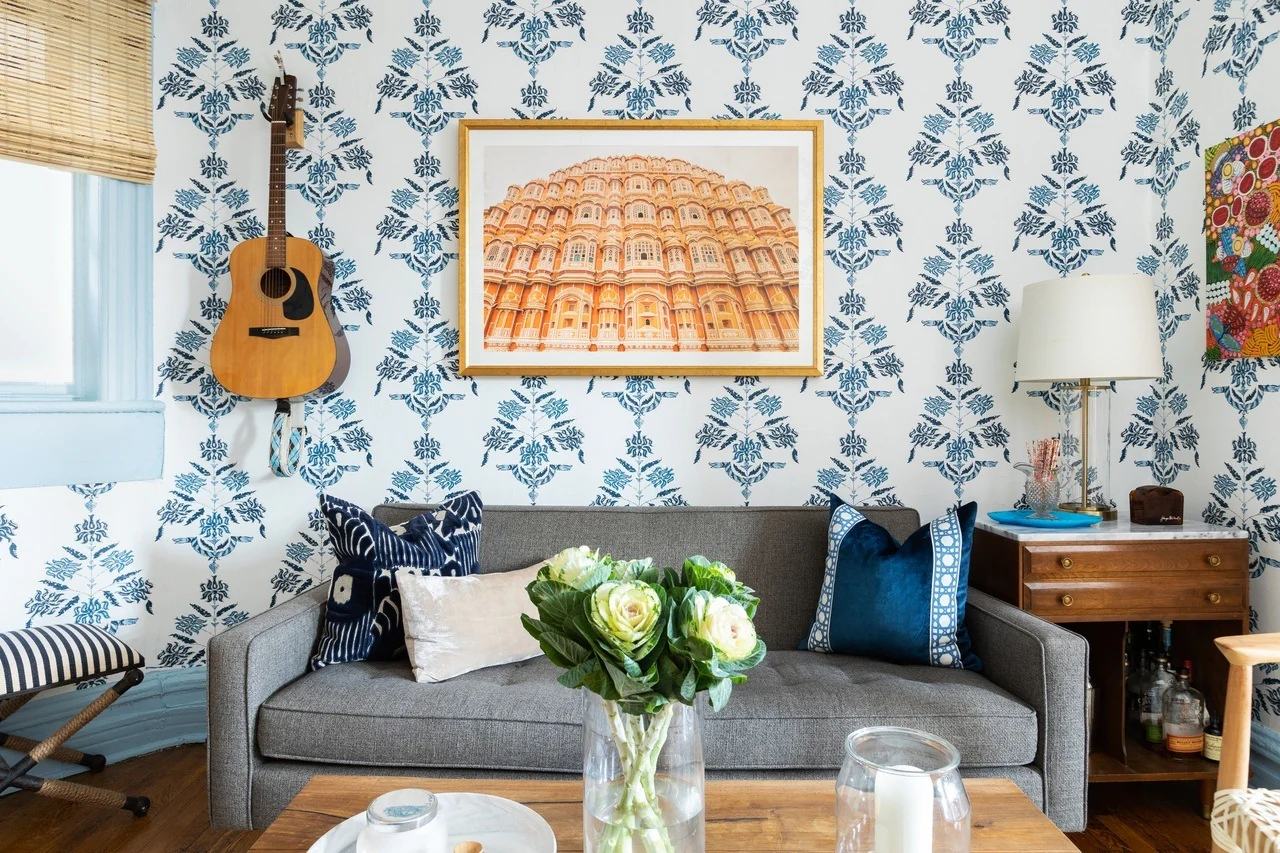
Pattern brings life to a room.
It adds movement, personality, and visual rhythm. Without it, interiors can feel flat. With too much of it, they can feel chaotic.
The difference between curated and cluttered isn’t the number of patterns, it’s how intentionally they’re combined. Designers rarely avoid patterns. Instead, they balance scale, color, and distribution to create harmony.
If you’ve ever loved multiple prints but felt unsure how to use them together, here’s how to mix patterns confidently, without overwhelming your space.
Step 1: Start with a Clear Color Palette
Pattern mixing works best when color creates cohesion.
Before introducing multiple prints, define a consistent palette. This doesn’t mean everything must match exactly, but undertones should align. Warm with warm. Cool with cool.
For example, if your room features soft taupes, warm whites, and brass accents, introducing cool blue-based prints may feel disconnected. Instead, layer patterns within the same tonal family.
When color flows naturally, the eye accepts variation in pattern more easily.
Step 2: Vary the Scale
One of the most common mistakes in pattern mixing is using prints that are too similar in size.
Designers follow a simple principle: mix large, medium, and small scale patterns.
- A large-scale floral or abstract anchors the space.
- A medium geometric adds structure.
- A small stripe or subtle texture fills the gaps.
Scale contrast prevents visual competition. If every pattern is bold and oversized, the room feels busy. If every pattern is tiny, it feels cluttered. Balance is what keeps things calm.
Step 3: Anchor with One Dominant Pattern
Choose one pattern to lead.
This could be a rug, wallpaper, upholstered chair, or window treatment. Let that primary print set the tone, then build around it.
For instance, if you introduce patterned curtains as the main visual statement, keep surrounding patterns more restrained. Pull colors from the curtain fabric into pillows or throws to create continuity.
When one pattern takes center stage, others can support rather than compete.
Step 4: Use Neutrals as Breathing Room
Even the most pattern-rich rooms include visual pauses.
Solid fabrics and neutral surfaces prevent the eye from becoming overwhelmed. Think of them as negative space — essential, not empty.
If your sofa features a subtle print and your drapery carries a bolder motif, a solid rug or neutral walls provide relief. Without this breathing room, patterns begin to clash simply because there’s nowhere for the eye to rest.
Restraint amplifies impact.
Step 5: Mix Pattern Types Thoughtfully
Different pattern families bring different energy.
- Florals feel organic and romantic.
- Geometrics feel structured and modern.
- Stripes add order and rhythm.
- Abstracts feel expressive and contemporary.
Combining two highly intricate patterns can feel chaotic. Instead, pair complexity with simplicity. A detailed botanical works beautifully alongside a clean stripe. A bold geometric pairs well with a subtle texture.
Contrast creates harmony when done intentionally.
Step 6: Distribute Pattern Evenly Throughout the Room
Pattern shouldn’t cluster in one corner.
If all your prints live on one side of the room, the space feels visually heavy. Instead, distribute them throughout — a patterned accent chair across from patterned window treatments, a printed pillow that echoes tones from across the room.
For example, pairing tailored custom drapes in a subtle print with smaller patterned accessories helps the room feel cohesive rather than top-heavy.
Balance across the room prevents imbalance within it.
Step 7: Consider Texture as a “Quiet Pattern”
Not all pattern has to be bold.
Texture can function as a pattern without adding visual noise. Woven fabrics, linen slubs, jacquards, and subtle embroidery introduce depth in a quieter way.
In fact, layering textured solids alongside prints often enhances the overall design. A smooth leather chair next to a patterned pillow creates contrast. A woven shade against printed upholstery softens the look.
Texture supports pattern without shouting.
Step 8: Keep Architecture in Mind
Rooms with strong architectural features, paneling, built-ins, and ceiling beams already have visual interest. In these spaces, pattern should complement rather than compete.
Simpler prints often work best in highly detailed rooms. Meanwhile, minimalist spaces can handle bolder combinations because there’s less architectural distraction.
The room itself dictates how much pattern it can carry.
Step 9: Test Before You Commit
Before finalizing fabric selections, place samples together in natural light.
Patterns that feel harmonious in isolation may compete once side by side. Viewing them together allows you to assess:
- Color alignment
- Scale contrast
- Overall balance
Lay swatches next to flooring and upholstery. Step back. Squint. If nothing feels jarring, you’re on the right track.
Designers rarely rely on memory — they rely on visual comparison.
Step 10: Know When to Stop
Confidence in pattern mixing also means knowing when enough is enough.
If the room already feels layered and dynamic, adding one more print may tip it into excess. Editing is part of the design process.
Ask yourself: Does this new pattern enhance the story of the room, or distract from it?
Intentional restraint is what separates curated from chaotic.
Why Pattern Works When Balanced
When thoughtfully combined, patterns:
- Add dimension
- Create movement
- Express personality
- Break up monotony
- Enhance depth
But they require hierarchy and harmony. A room full of competing prints feels loud. A room with layered, balanced patterns feels alive.
Bringing It All Together
To mix patterns without overwhelming your space:
- Establish a cohesive color palette.
- Vary scale intentionally.
- Anchor with one dominant print.
- Use neutrals as visual breathing room.
- Mix pattern families thoughtfully.
- Distribute prints evenly.
- Incorporate texture for subtle depth.
- Edit when necessary.
Pattern isn’t the enemy of calm interiors; imbalance is.
With the right approach, you can layer prints confidently and create a space that feels dynamic, curated, and unmistakably intentional.